Anna’s Story
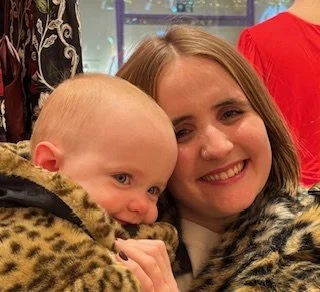
Anna was diagnosed with Stage 3 neuroblastoma in October 2001, just a few months before her 2nd birthday and underwent six months of treatment. Anna has now been in remission for over 24 years and is a mum to baby Agnes.
Elizabeth, Anna’s mum, shares her story…
Anna was nearly two years old and had been walking and talking happily. Then something changed, I noticed she was walking with a wide gait and she became unsteady on her legs. She screamed if she went on the swings and became uncharacteristically miserable.
We saw Dr Antonia Clarke straight away at St George’s who suspected this might be Opsoclonus Myoclonus Syndrome (OMS) also known as Dancing Eye Syndrome and put Anna on steroids to halt the autoimmune brain damage.
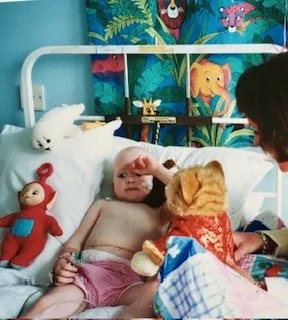
In the space of two weeks, Anna became so ataxic she had lost the ability to use her hands and legs, eventually she stopped speaking altogether.
Neuroblastoma is often found in children with OMS so after more tests Anna was diagnosed with stage 3 neuroblastoma. This was not what we had expected at all. We were lucky the neuroblastoma presented with OMS as these cases can have a more promising outcome.
All we could wish for back then was that she would recover.
Neuroblastoma UK helped with advice on the long term outcomes for the illness. In fact after 24 years, I still have the booklet. It advised that the new CADO protocol was untested and that Anna may be able to have children one day, but the treatment may also mean she may not be able to have children of her own.
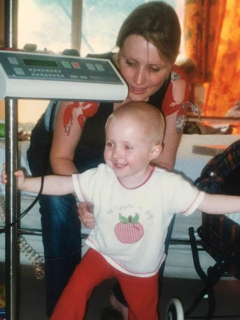
Fertility seemed irrelevant at the time. However, when Anna met Matt, her future husband, he was made aware that there may be problems having a baby of their own. Anna and Matt got married at 22 and had Agnes a couple of years later. It made sense not to hang about when it came to having children. Anna was monitored closely particularly in late pregnancy and Agnes was born safely, as advised, by caesarean section.
Baby Agnes is just delightful. Anna has turned into the most brilliant mum too. Her fun and resilient personality which helped her cope with chemotherapy and surgery has emerged again in motherhood.
We wanted to share this story because we wanted to give hope to those on the CADO pathway. All these years later we are learning more about outcomes from the treatment that saved Anna’s life. Neuroblastoma UK is wonderful for continuing with research and support.
Funding vital research. Saving young lives.
We fund vital research to develop new and more effective treatment for children with neuroblastoma. But we need your help. Please donate today and join the fight against childhood cancer.