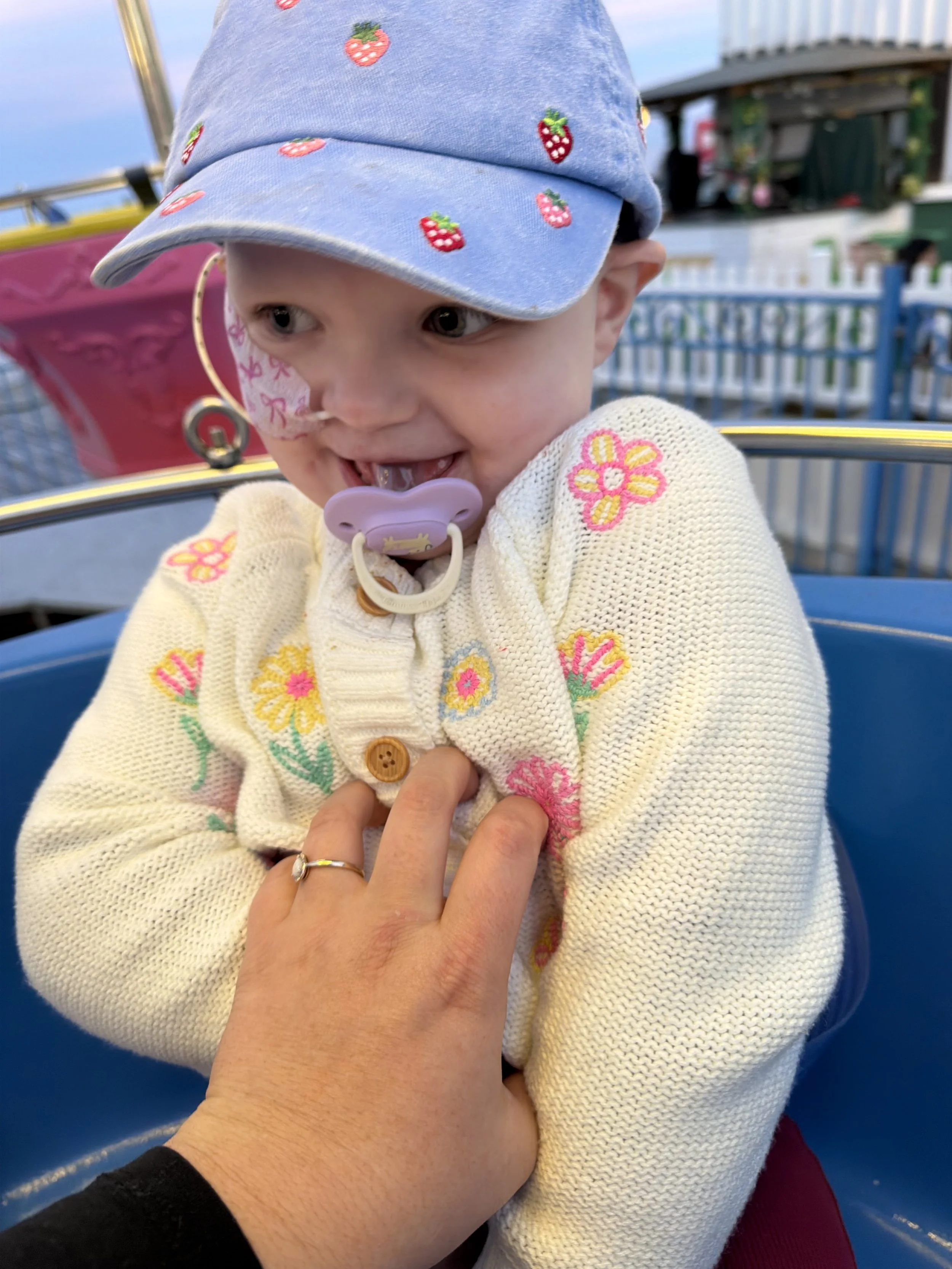
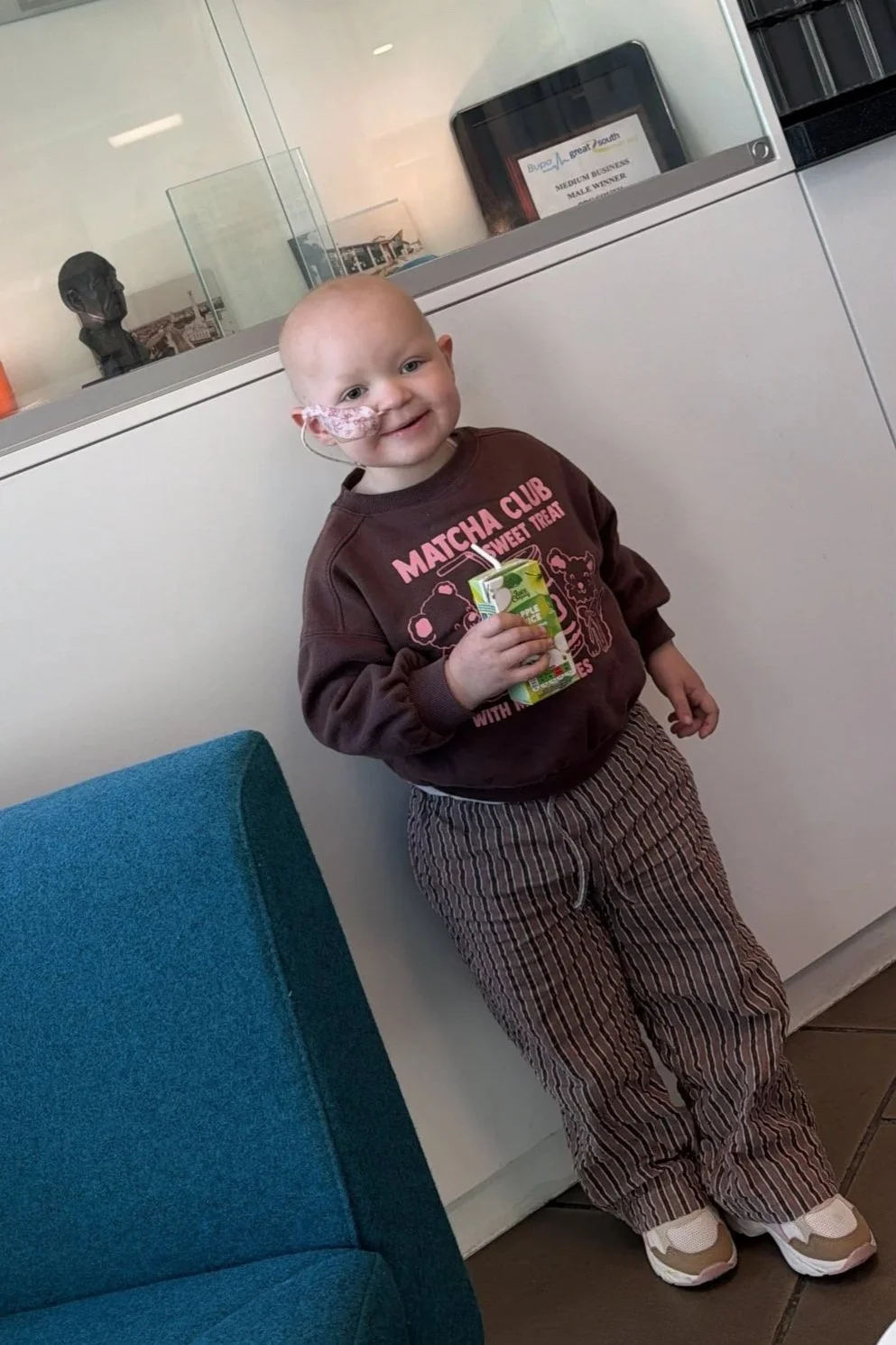
When Betty-Rose was only 1 year old, she was diagnosed with Stage 4, High-Risk Neuroblastoma. Now three, Betty’s journey is far from over as her family look to Spain for further treatment options. Alicia, Betty’s mum, shares her story…
Betty is so in love with the world and everything in it, she cares so deeply about everything, she's such a polite and truly kind soul, I'm so blessed to be her mum, her intelligence is almost scary and her biggest passion is baking. It is heart breaking as her mum to watch her go through all of this.
Betty was diagnosed in August 2025 with Stage four, high-risk neuroblastoma with MYCN amplification and ALK mutation after experiencing a temperature with no cause, as well as experiencing fatigue, weight loss and eventually she stopped eating.
We had never heard of the word neuroblastoma let alone knowing it was a cancer. I was shocked to find out how aggressive it was and was even more devastated about the rapid growth that comes with it.
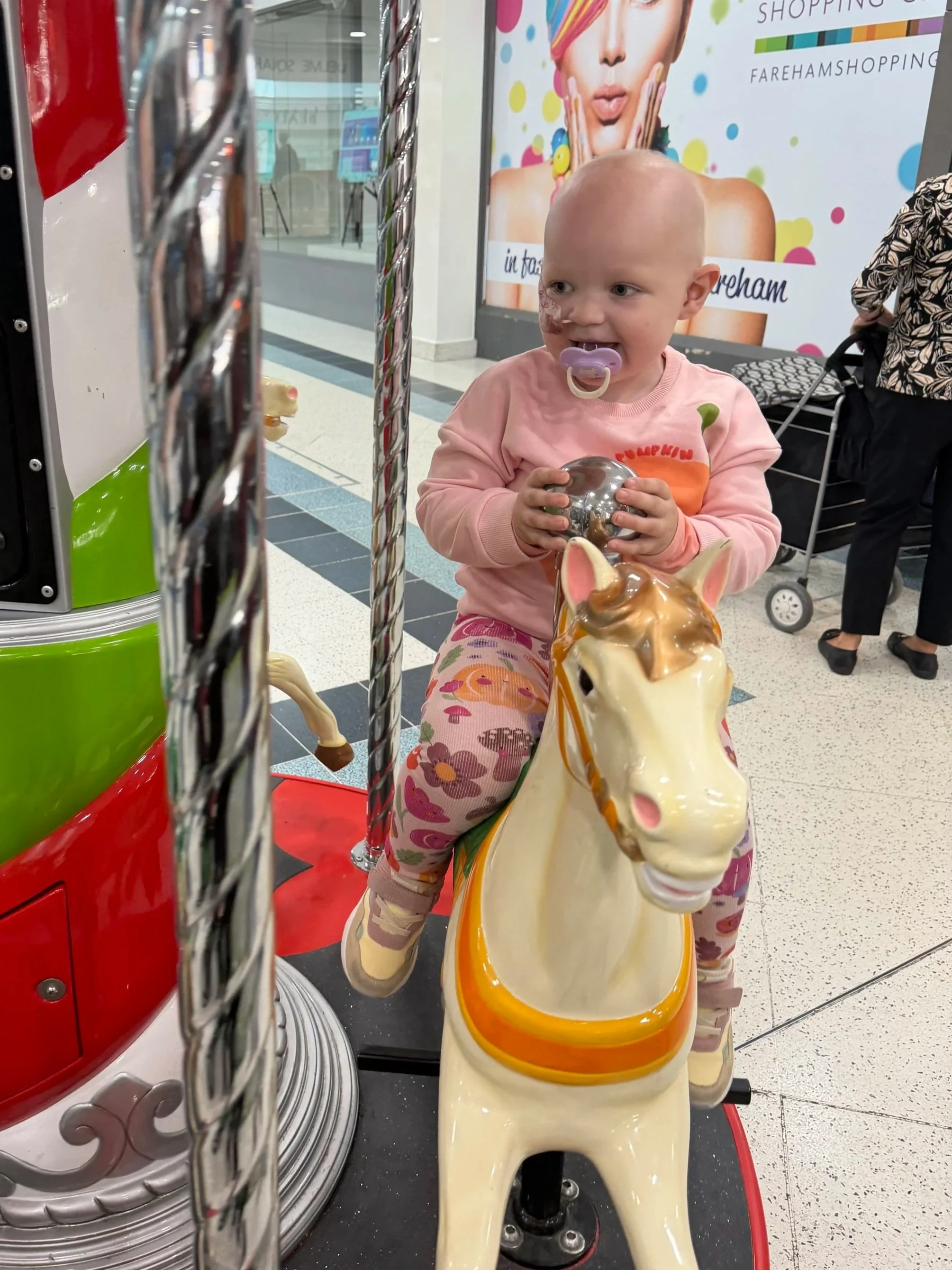
Betty was very sick at the start, I truly think that had we left her a few more days we may have lost her, when we took her to A&E her blood level was 47 at the time and I didn't know what that meant. Knowing what I know now, I realise how close of a call it was.
At the start Betty suffered with a catastrophic internal bleed of her main tumour, we nearly lost her, GOSH saved her life by doing an embolization of her tumour vessel.
Since her diagnosis, Betty has undergone extensive and intensive treatment, including chemotherapy, major surgery to remove disease from her left adrenal region and around her left kidney, and radiotherapy targeting her brain, spine and abdomen.
Betty's tumour was 15x9x9cm at diagnosis and inoperable, after Rapid Cojec it had gone down to around 3cm and was completely necrotic, I hope by what happened to Betty at the start could maybe be researched in the future and change the outcome for other children with large tumours. Overall Betty has coped well with side effects despite what happened at the start, we have always had really good regimes in place.
I think neuroblastoma treatments need to be more tailored to individual cases, I know many families and none of us have had the same ride. Gentler treatment options are desperately needed. To go through the heartache of being diagnosed in the first place is bad enough but to lose your child to the side effects of treatment is a heart break no family should have.
Sadly, despite everything she has endured, Betty has unfortunately relapsed.
Further investigations identified recurrent disease in her right femur, and we have subsequently been given the devastating news that Betty’s neuroblastoma is considered terminal.
Betty has also experienced significant bone marrow suppression following her treatment, with ongoing difficulties maintaining her platelet levels. This has resulted in repeated platelet transfusions and creates additional challenges when considering further chemotherapy.
We are refusing to give up on finding further treatment options for Betty. We have been working towards accessing specialist treatment at Sant Joan de Déu Children’s Hospital in Barcelona, Spain. The proposed treatment involves the RIST protocol, combined with targeted therapy using lorlatinib and anti-GD2 immunotherapy with naxitamab.
Our hope is that this combination may offer Betty another opportunity to control her disease and give her more precious time, although we understand that there are no guarantees.
We are simply trying to give our little girl every possible opportunity.
A big thank you to Alicia for sharing Betty’s story
Funding vital research. Saving young lives.
We fund vital research to develop new and more effective treatment for children with neuroblastoma. But we need your help. Please donate today and join the fight against childhood cancer.